

The smartphone could be entering a new phase in which users spend less time tapping through applications and more time simply telling their devices what they want.
That is the direction Google is pursuing with Android as artificial intelligence becomes increasingly integrated into mobile software. Rather than functioning primarily as a tool that responds to individual commands, future smartphones could use AI agents to understand a user’s objective, make decisions and complete multiple steps across different applications.
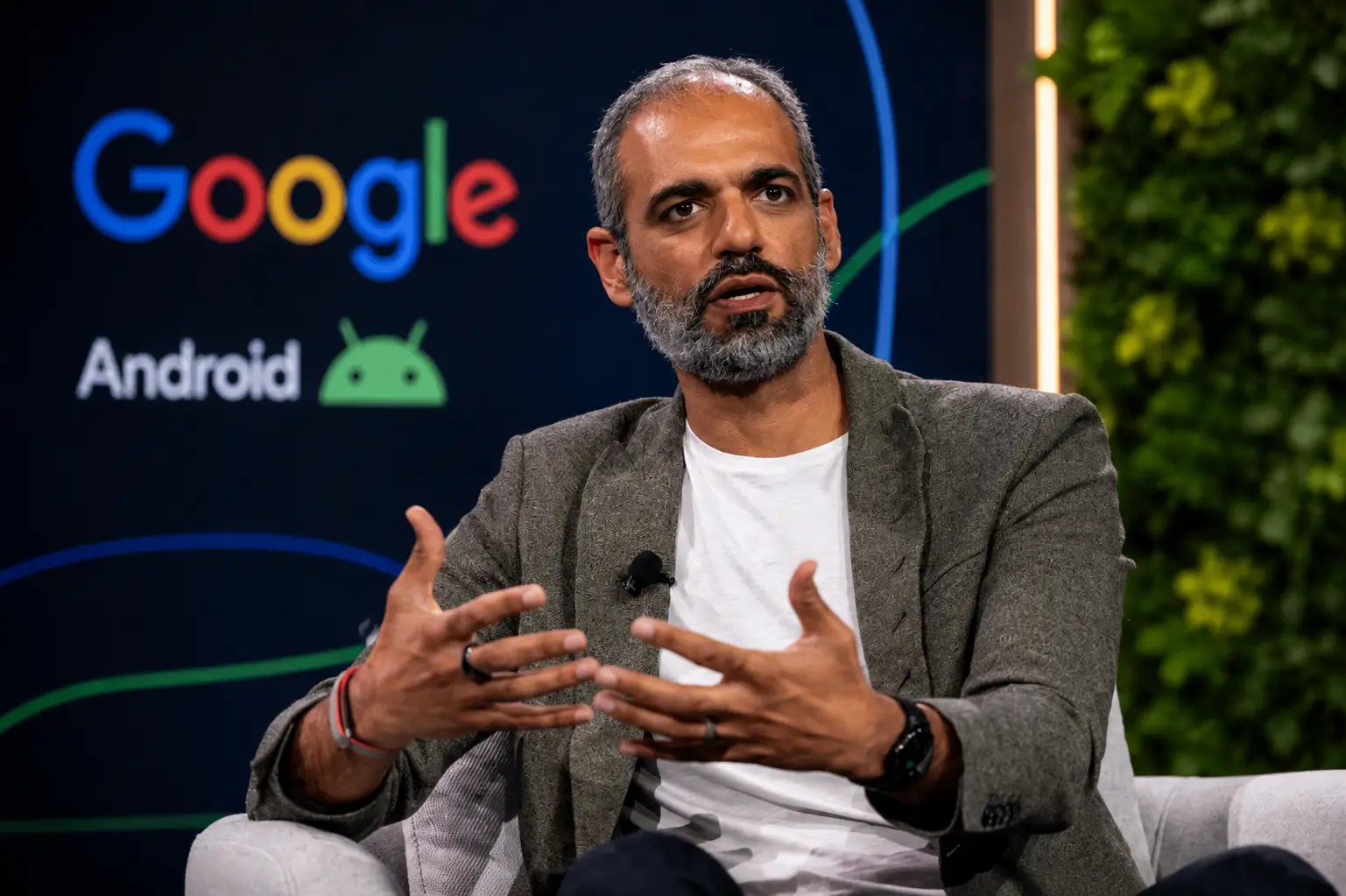
Sameer Samat, president of Google’s Android ecosystem, said the company’s long-term approach is focused on making smartphones capable of understanding what users are trying to accomplish rather than requiring them to manually manage every stage of a task.
From Apps to Actions
Today’s smartphones often require users to move between several applications to complete relatively simple activities. A future AI-powered Android device could potentially handle many of those steps automatically.
For example, a user could ask an AI assistant to review information from a medical appointment, determine whether a particular service is covered by insurance and arrange a follow-up visit. Instead of opening separate apps, searching for information and entering details manually, the user could simply explain the desired outcome.
Such capabilities are still developing and are not yet available at the level Google envisions. However, the company is positioning Android to gradually move toward this more automated experience.
The concept represents a major change in how people interact with smartphones. Instead of being the person who directs every action, the user could increasingly become the person who sets the objective while AI handles the execution.
Google’s Pixel Strategy
Google’s latest Pixel devices provide an indication of how the company is experimenting with this future.
New hardware and software features are designed to make AI interactions more visible and intuitive. One example is an indicator on the rear of a Pixel device that can signal when Gemini is processing a request, giving users a clearer indication that the assistant is working.
Google is also developing Android features designed to show users the progress of AI-driven tasks. The broader goal is to make interactions with AI feel more natural while reducing the need to constantly check whether a request is being processed.
Another Google tool focuses on converting spoken conversations into polished written communications. By cleaning up speech and removing unnecessary verbal pauses, the technology can transform casual dictation into a more usable message or email.
The Smartphone Could Become Less Demanding
Google’s long-term vision could fundamentally change the way people use mobile devices.
Currently, completing a task often means identifying the appropriate application, opening it, entering information and repeating the process elsewhere. AI agents could eventually connect these steps and perform them on the user’s behalf.
That could make smartphones more useful without necessarily requiring users to spend more time interacting with them.
The idea also reflects a broader industry movement. Smartphone manufacturers and AI companies are increasingly developing systems capable of handling tasks across applications rather than simply answering questions.
Samsung is integrating Google’s AI technology into its devices, while Apple is working toward a more capable version of Siri designed to operate across applications and use personal context. AI companies are also improving conversational interfaces to make interactions feel more natural.
Trust Remains a Major Challenge
The technological potential is significant, but consumer acceptance may prove just as important as technical capability.
People are becoming increasingly aware of concerns surrounding AI, including privacy, accuracy, employment disruption and the possibility of automated systems making mistakes.
For an AI agent to perform tasks independently, users must be comfortable giving it access to personal information and allowing it to take actions on their behalf.
That creates an important question for Google and the wider technology industry: how much control will consumers be willing to surrender in exchange for convenience?
An AI assistant that schedules an appointment or prepares an email may save time, but users will still expect transparency about what the system is doing and the ability to intervene when necessary.
A New Definition of the Smartphone
Google’s approach suggests that the next major evolution of smartphones may not be another hardware breakthrough. Instead, it could be a change in the relationship between people and their devices.
The smartphone of the future could become less like a collection of applications and more like an intelligent digital assistant capable of coordinating services on the user’s behalf.
Whether that vision becomes mainstream will depend on reliability, privacy, affordability and—most importantly—consumer trust.
The direction is clear: Google wants Android to move from a system that waits for instructions toward one that understands intentions. If that transition succeeds, the most important smartphone feature of the future may not be an app or a camera, but an AI agent capable of getting things done.
