

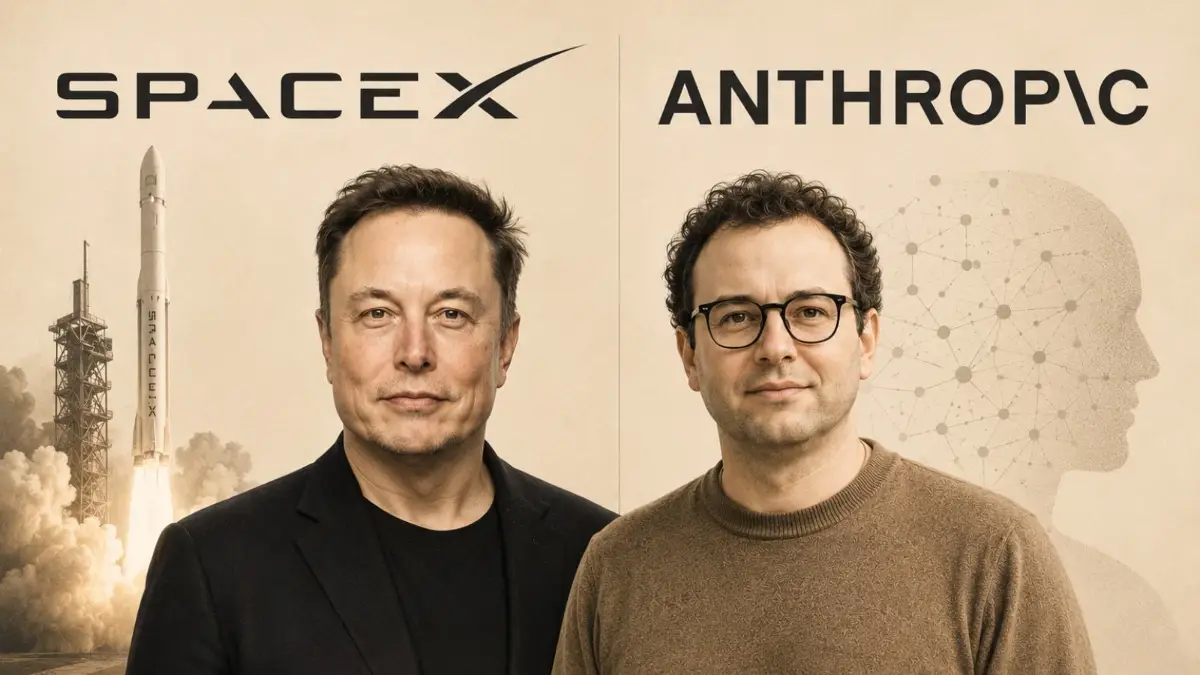
As concerns grow over AI-driven job losses and economic inequality, Elon Musk and Anthropic are proposing initiatives designed to extend the benefits of corporate wealth beyond investors.
Two major names in the technology industry are putting forward different approaches to sharing the financial benefits of artificial intelligence and related businesses with the public. Elon Musk has pledged to give one SpaceX share to every child in the United States, while AI developer Anthropic plans to dedicate 5% of its company shares to a fund supporting public-benefit initiatives.
The announcements arrive as public debate intensifies over whether the economic gains from advanced AI will be distributed broadly or concentrated among a small group of companies and wealthy investors.
Musk Announces Share Giveaway for American Children
Musk announced on social media on October 19, 2026, that he intends to provide one SpaceX share to every child in America beginning next year. He described the plan as the first of several initiatives, but did not explain how the shares would be distributed or establish detailed eligibility requirements.
Based on a share price of approximately $146 and an estimated 73 million children in the United States, the proposed distribution could be worth around $10.7 billion at the cited market price. The final value would depend on the share price when the distribution takes place and the number of eligible recipients.
Musk’s announcement followed Anthropic’s proposal to establish a dedicated fund for public-benefit activities. Responding to that initiative, he argued that distributing shares directly to individuals would be preferable to routing them through a separate organization.
However, important questions remain about how his pledge would work in practice, including how recipients would receive, hold, or manage their shares.
Anthropic Creates a Fund for Public Benefit
Anthropic, the company behind the Claude family of AI models, has announced plans to allocate 5% of its equity to a new Public Benefit Fund. The fund is intended to support initiatives that benefit society, potentially including charitable donations and efforts addressing the effects of AI on employment and the economy.
The company has also outlined a mechanism under which additional shares could be allocated as its valuation increases, subject to the proposed arrangement’s conditions and board discretion.
Unlike Musk’s proposed direct distribution to children, Anthropic’s approach would place resources under a dedicated organization responsible for determining how the funding is used. The model could give the company flexibility to support several causes, although the fund’s governance, priorities, and eventual impact will be important factors to watch.
Anthropic is also preparing for a major public-market listing, making its approach to corporate responsibility and long-term social impact particularly significant.
Growing Concerns About AI and Employment
The initiatives come amid uncertainty about how AI will reshape the labor market. Businesses are investing in AI systems to automate tasks, improve productivity, and reduce operating costs. While these technologies could create new industries and opportunities, they may also disrupt existing jobs and put pressure on some workers’ wages.
The distribution of AI-generated wealth has therefore become a central question for policymakers, business leaders, and employees. If productivity gains primarily benefit company owners and investors, existing economic inequalities could widen. If those gains are shared more broadly, they could help support workers and communities during periods of technological change.
Public concern is also growing around the pace of AI development, its effects on everyday life, and the infrastructure needed to support increasingly powerful systems.
A Wider Debate About Corporate Responsibility
Musk’s proposal and Anthropic’s fund represent two different ideas about how businesses can contribute to the public good. One emphasizes giving equity directly to individuals, while the other focuses on using a dedicated fund to support broader social objectives.
Both proposals will ultimately be judged by their implementation, transparency, and measurable results. Musk has yet to publish the practical details of his planned distribution, while Anthropic’s fund will need clear priorities and accountability to demonstrate its value.
The wider challenge extends beyond philanthropy. Governments, businesses, and communities will need to consider how education, workforce training, social protections, and economic policy can adapt as AI becomes more capable.
The key question is no longer just how much wealth AI can generate, but who will benefit from it. The success of these initiatives will depend on whether their promises translate into tangible, lasting opportunities for the public.
