

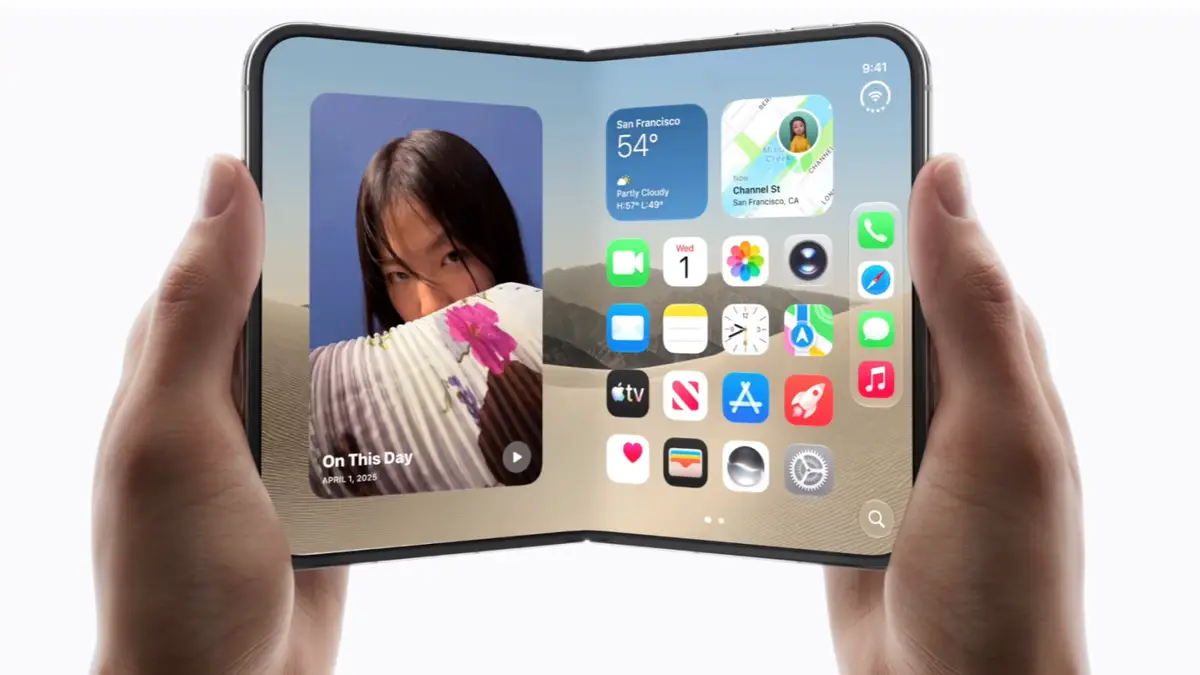
Cupertino, California — Apple has taken a major step in the evolution of its flagship smartphone with the introduction of the iPhone Duo, its first foldable iPhone.
The new device represents a significant departure from Apple’s traditional iPhone design. It features an external display for everyday use and opens to reveal a much larger internal screen, creating a tablet-like experience in a compact form.
The iPhone Duo is priced from $1,999 and is scheduled to become available on October 23.
Apple’s entry into the foldable market comes several years after competitors such as Samsung, Huawei and Motorola introduced their own flexible-screen smartphones. Although foldable devices remain a relatively small part of the overall smartphone market, Apple’s arrival could increase mainstream interest in the category.
A Different Way to Use an iPhone
After spending limited time with the device, one of the most noticeable aspects is how Apple has approached the foldable format beyond simply providing a larger screen.
The company appears to be exploring new ways for the phone to fit into everyday routines. For example, the folded and partially opened form can make the device useful in situations where users might want to position it on a surface, including as a bedside display.
Apple’s leadership has described the Duo as a major evolution in the foldable smartphone experience. However, whether consumers agree will ultimately depend on how useful they find the new design—and whether those benefits justify its premium price.
Two Displays in One Device
The iPhone Duo has a compact exterior profile when closed and expands into a considerably larger screen when opened.
The outer display measures approximately 5.4 inches, while the internal display stretches to around 7.6 inches, providing a viewing area comparable to a small tablet.
Apple has also focused heavily on the quality of the flexible display. The interior panel uses a matte-like surface intended to reduce reflections and fingerprints, potentially making it more comfortable to use in different lighting conditions.
One particularly important improvement is the folding area. The central crease is reportedly difficult to notice during normal use and is designed to feel smoother when touched.
The Crease Challenge
Foldable smartphones have historically faced criticism because of visible creases where the displays bend. Earlier generations from several manufacturers made the folding line particularly noticeable, which sometimes distracted from the larger-screen experience.
Display technology has improved considerably since those early products. Newer foldable devices have become thinner and have reduced the visibility of their hinges and screen creases.
Apple’s approach reflects the industry’s broader effort to make flexible displays feel increasingly similar to conventional smartphone screens.
Apple Faces a New Market Test
The iPhone Duo enters a market where competitors have already had years to experiment with foldable designs. Apple’s advantage may therefore depend less on introducing the concept and more on how effectively it integrates the technology into its hardware and software ecosystem.
The company will also face a major pricing challenge. At nearly $2,000, the Duo costs considerably more than many conventional premium smartphones.
For consumers, the key question will be whether the larger display, flexible design and new usage possibilities offer enough practical value to justify the additional expense.
A Potential Turning Point for Foldables
Apple’s decision to enter the foldable smartphone market could have implications well beyond its own product lineup.
The company’s enormous global customer base could expose foldable technology to consumers who have previously ignored the category. Increased competition could also encourage manufacturers to improve durability, displays, software experiences and pricing.
The iPhone Duo therefore represents more than a new device for Apple. It is a test of whether foldable smartphones can move from an emerging niche into a mainstream category.
If consumers embrace the concept, Apple’s first foldable iPhone could mark the beginning of a new chapter in smartphone design. If the premium price proves too high, the company may have to convince customers that folding a phone offers more than novelty—it must provide a genuinely better way to use it.
