

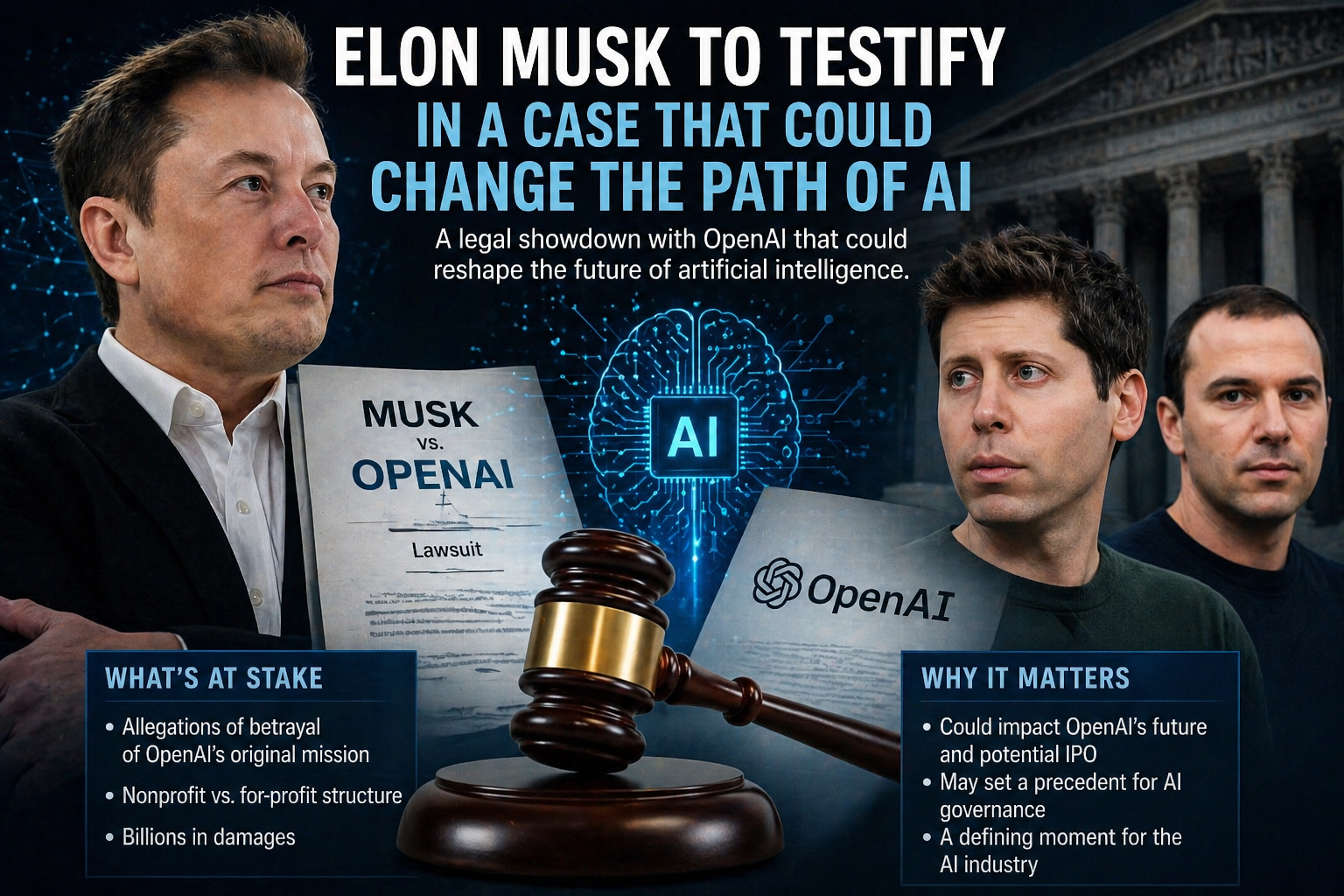
A high-stakes legal battle involving Elon Musk is set to unfold in court, with potential consequences that could redefine the future of artificial intelligence. Musk is expected to testify in a case against OpenAI, along with its leadership, including CEO Sam Altman and president Greg Brockman.
The dispute centers on Musk’s claim that OpenAI diverged from its founding principles. Originally established in 2015 as a nonprofit organization focused on developing AI for public benefit, the company later introduced a for-profit structure to secure funding and scale its operations. Musk argues that this transition undermined the organization’s original mission and misrepresented its intentions to early supporters.
The case will be heard by a jury whose findings will guide Judge Yvonne Gonzalez Rogers in determining the outcome. Musk is seeking significant changes, including a return to a nonprofit structure, leadership adjustments, and substantial financial restitution directed toward the organization’s original foundation.
Beyond the legal arguments, the trial carries broader implications for the AI sector. OpenAI is considered one of the most influential players in the industry and has been exploring future public market opportunities. Any disruption to its structure or strategy could have ripple effects across the rapidly evolving AI landscape.
OpenAI, however, strongly disputes Musk’s claims. The company maintains that its structural evolution was necessary to support innovation and growth in a highly competitive field. It has also suggested that Musk’s legal action stems from disagreements following his departure from the organization in 2018 and his subsequent involvement in competing ventures.
The courtroom proceedings are expected to reveal extensive internal communications, including emails and documents that trace the company’s evolution and the dynamics between its early leadership. These materials may offer deeper insight into the strategic decisions that shaped one of the world’s most prominent AI organizations.
At its core, the case highlights a fundamental tension within the technology sector: balancing profit-driven growth with the ethical responsibility of developing transformative technologies. As AI continues to influence economies and societies worldwide, the outcome of this trial could set a precedent for how such organizations are structured and governed in the future.
