

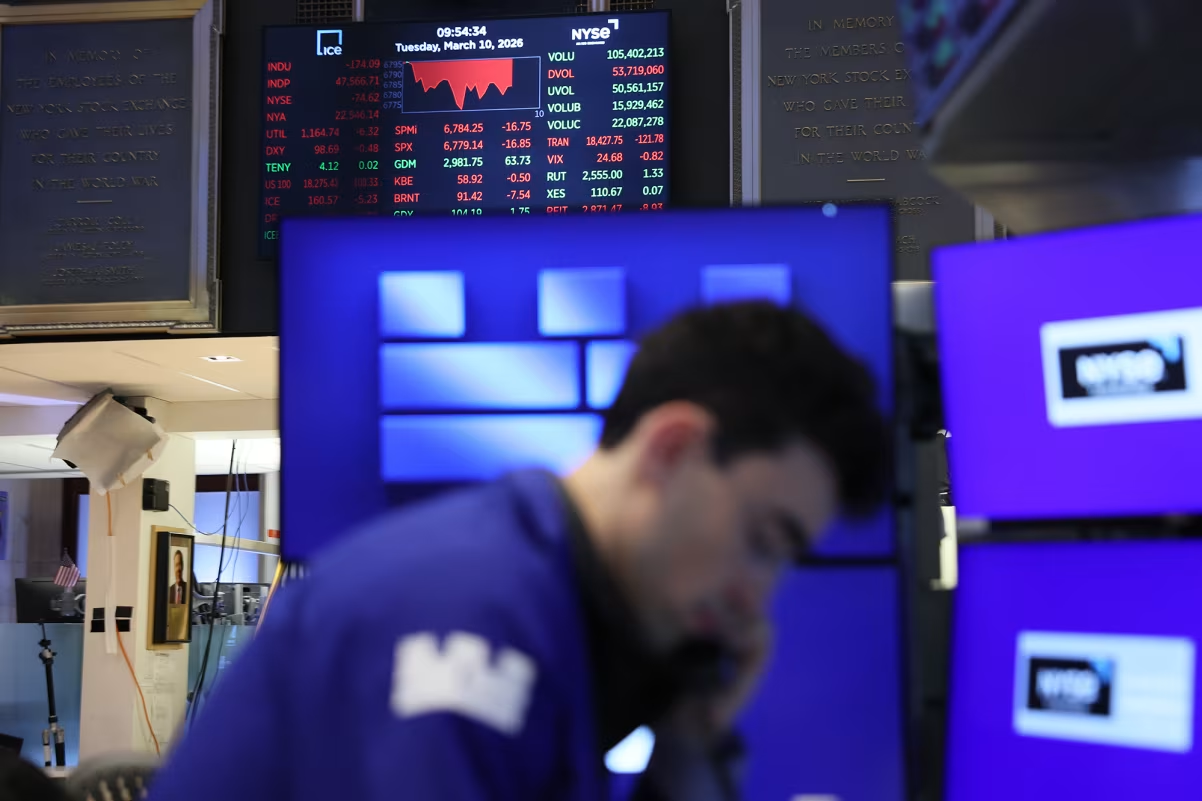
The escalating conflict involving Iran is increasingly testing one of President Donald Trump’s most prominent political claims: a strong and stable economic performance under his leadership. Financial markets, energy prices, and geopolitical risks are now shaping a more uncertain outlook that could complicate his economic messaging.
For much of his current term, Trump has highlighted stock market strength, favorable borrowing conditions, and currency trends as evidence of successful economic stewardship. However, the ongoing Middle East tensions have begun to shift market sentiment. Investors are reacting to heightened uncertainty around global energy supply, leading to fluctuations in equities and rising government bond yields.
Market Turbulence and Inflation Concerns
The conflict has driven oil prices higher, raising fears of inflation and tighter financial conditions. Analysts warn that prolonged instability could undermine consumer confidence and investment momentum, particularly if energy costs continue to climb. Higher bond yields — often a sign of inflation expectations — also translate into increased borrowing costs for businesses and households.
International energy authorities have warned that the crisis could pose a major risk to the global economy, surpassing disruptions seen during past energy shocks.
Strategic Energy Routes at Risk
A central point of concern is the Strait of Hormuz, a vital maritime route for global oil shipments. Threats of disruptions in this corridor have unsettled markets and heightened fears of supply shortages. The possibility of retaliatory attacks on regional infrastructure has added to investor anxiety and market volatility.
Political Fallout and Domestic Debate
The conflict has also sparked divisions within Trump’s political base, with some influential voices questioning whether military escalation aligns with his earlier “America First” priorities. Rising fuel prices and uncertainty over the war’s long-term strategy have intensified debate among supporters and critics alike.
At the same time, diplomatic stalemates and continued hostilities suggest that the economic and political consequences may deepen if the conflict persists.
A Narrative Under Pressure
Trump’s economic messaging has often relied on market performance as a benchmark of policy success. However, as geopolitical risks ripple through financial systems, the administration faces the challenge of maintaining investor confidence while managing a complex foreign policy crisis.
Ultimately, the trajectory of markets — and the broader economy — may hinge on how quickly tensions subside. Until then, the intersection of war and economic policy is likely to remain a defining issue shaping both domestic politics and global financial stability.
